The U.S. men’s national team is bracing itself to cohost the 2026 World Cup with Mexico and Canada, but the roadmap to qualify for the next edition, in 2030, is already clear.
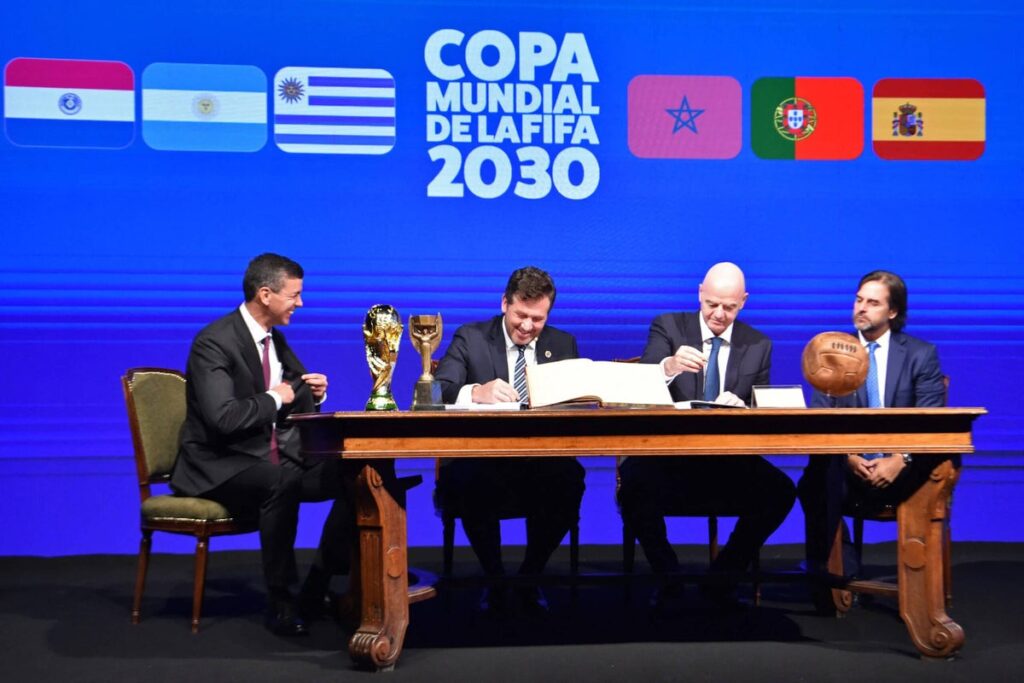
On Friday, Concacaf confirmed its competition calendar for the next men’s international cycle, and within that set the parameters for 2030 World Cup qualification. That tournament, which will be held in Spain, Portugal and Morocco (along with three centennial celebration openers in Argentina, Paraguay and Uruguay), will also feature 48 teams, six (and potentially seven, via FIFA intercontinental playoff) of which will come from the Concacaf region.
Qualification for Concacaf teams will begin in September and October of 2027 in the first half of FIFA’s new expanded window, the confederation announced, with the first round including 22 teams and consisting of direct elimination. Those teams will be divided into 11 pairs, with the highest-ranked teams facing the lowest-ranked in a home-and-home series. The aggregate winners will advance to the second round.
The U.S. will presumably begin qualifying in the second round, where the top 13 Concacaf teams (based on FIFA rankings) and the 11 teams that advance from the opening round will begin a group stage in the second half of the September-October window, and then continue games in November 2027 and March 2028.
The participants will be divided into six groups of four, with each facing the other three teams home and away. The six group winners and six runners-up will advance to the final round of qualifying – another group stage.

Concacaf’s 2030 World Cup qualifying format and timeline (Concacaf)
That 12-team final round of qualifying will be played in June 2028 and September-October 2029. The 12 participating teams will be divided into three groups of four, with each facing the other teams in its group home and away. The three group winners and three runners-up will secure places at the World Cup, while the two best third-place finishers will advance to a Concacaf World Cup qualifier two-game, home-and-home play-in series in November 2029 to earn a berth in the FIFA intercontinental playoff.
The U.S., Mexico and Canada qualified as hosts for the 2026 World Cup, while Panama, Curaçao and Haiti emerged from qualifying with the region’s other automatic spots. Jamaica and Suriname will play intercontinental playoffs in March against New Caledonia and Bolivia, respectively, with winners facing the Democratic Republic of Congo and Iraq for spots in this summer’s tournament.
In the format for 2030, it’s highly possible that the U.S. and Mexico will avoid playing each other en route to the World Cup. The traditional rivals have staged many epic qualifying matches, but depending on seeding in the different group formats, those national teams should now miss out on what have traditionally been some of the toughest tests in the region.

What the Concacaf men’s international calendar will look like for the 2030 World Cup cycle (Concacaf)
In addition to qualifying, Concacaf announced the confederation will hold Gold Cup tournaments in the summers of 2027 and 2029, as well as Nations League games in 2026-27 and 2027-28.
“As we look ahead, the four-year calendar we have developed ensures that our members can continue to pursue their next goals through consistent elite competition, whether that means earning promotion in the Concacaf Nations League, qualifying for or winning the Concacaf Gold Cup, or ultimately reaching the pinnacle of our sport: the FIFA World Cup,” Concacaf president Victor Montagliani said.
In theory, the U.S. could go through qualifying without facing all of the other top teams in Concacaf, and with the Nations League schedules, it will continue to be difficult to find dates where they can play top opponents as they prepare for the next World Cup.